
Enterprise Ticketing & Event Management
Cloud-based ticketing and event management for venues of all sizes
Etix
UX Design, Development
Ticketing & Events
Etix is a cloud-based ticketing and event management platform that empowers venues to sell tickets online, manage events, and gain real-time insights into sales and attendance,all from a single, intuitive system.
Online Ticket Sales
Sell tickets online with a seamless purchasing experience, supporting reserved seating, general admission, and multi-day event passes.
Real-Time Reporting
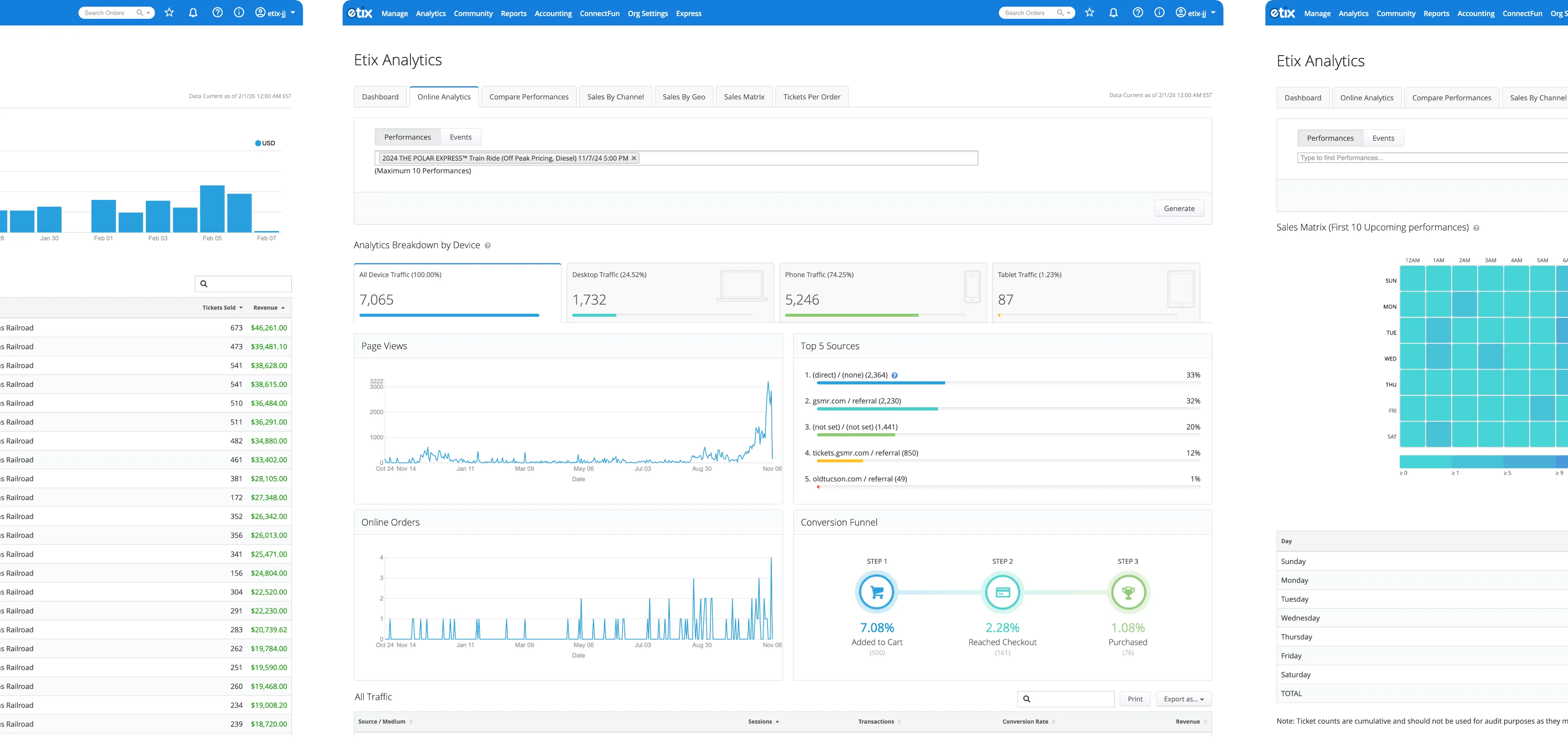
Access live sales dashboards, attendance tracking, and revenue analytics to make informed decisions during and after events.
Customer Management
Build and maintain customer profiles with purchase history, preferences, and communication tools for targeted outreach.
Multi-Channel Distribution
Distribute tickets across multiple sales channels including web, mobile, box office windows, and third-party outlets.
Access Control
Scan and validate tickets at entry points with real-time capacity tracking and fraud prevention for secure venue access.
Event Management
Create, configure, and manage events with flexible pricing tiers, venue mapping, and automated on-sale scheduling.
The Challenge
Born during the dot-com boom, Etix had grown into an enterprise platform carrying decades of legacy code, inconsistent UX patterns, and thousands of pages of sprawling functionality. Page load times were costly, forms were lengthy and complex, and the interface had evolved without a unifying design language, making it harder for clients to learn and more expensive to maintain.
The Solution
We led a ground-up modernization effort, rebuilding critical interfaces in React and TypeScript with new API endpoints designed for performance and flexibility. A scalable design system was introduced to enforce consistent patterns across the platform, giving every feature a shared visual language that holds up as the product continues to grow.
The Result
The modernized platform delivered measurably higher conversion rates, a significant drop in support tickets, and fewer knowledgebase articles needed to explain core workflows. Faster page loads and an intuitive interface meant clients spent less time learning the tool and more time selling tickets.